
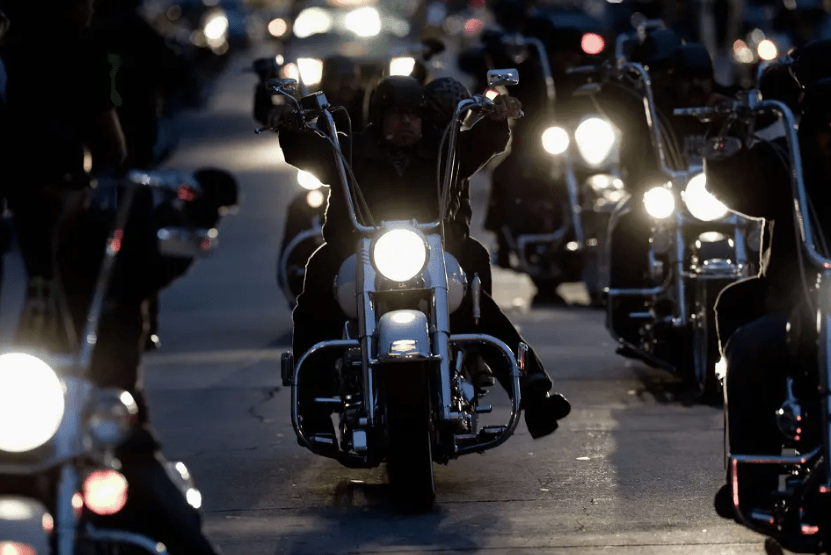
In the world of motorcycle clubs, especially outlaw motorcycle clubs (OMCs) like the Sons of Silence, one pattern repeats itself endlessly: a single incident involving a couple of members explodes into headlines that paint the entire club as a criminal enterprise. This is motorcycle club profiling at its worst — a bias that infects both mainstream media coverage and law enforcement tactics. It’s not just lazy journalism or aggressive policing; it’s fundamentally wrong because it punishes people for who they associate with rather than what they’ve actually done as individuals.
Take the recent Gonzales, Louisiana incident. Two 38-year-old men from Prairieville, identified as members of the Sons of Silence MC, were arrested following a parking lot altercation where a victim was allegedly assaulted during an attempted car theft. Media outlets quickly framed it as “Motorcycle Club Members Arrested in Brutal Attack,” emphasizing their club affiliation right in the lead. Yet details about what actually sparked the fight, whether patches were involved, or any club sanction are conspicuously missing. This one-sided reporting is classic. News stories rarely seek the club’s perspective or context, instead leading with “outlaw motorcycle gang” labels that evoke images of organized crime syndicates.
Media Framing and Sensationalism
Media outlets love the outlaw biker narrative. It sells — leather vests, patches, and “1%er” imagery conjure rebellion and danger. But this framing often ignores nuance. Outlaw motorcycle clubs originated as a rejection of mainstream norms post-WWII, celebrating freedom, loyalty, and brotherhood. Most members live ordinary lives: they hold jobs, raise families, and ride for the camaraderie. Yet every arrest involving a patched member becomes “MC members terrorize community,” while similar crimes by unaffiliated individuals get no such collective blame.

This selective spotlight creates a feedback loop. Law enforcement feeds dramatic quotes and photos of colors or tattoos to the press, which amplifies the story nationwide. The public then associates all riders with crime. Positive stories — like clubs organizing charity runs, toy drives, or veteran support — rarely make the same headlines. Women’s clubs like the Road Angels in Thunder Bay or countless 1%er groups quietly raising money for local causes get minimal coverage compared to any hint of trouble.
Law Enforcement and the “Gang” Label
Law enforcement takes this further by classifying many OMCs as “Outlaw Motorcycle Gangs” (OMGs). This label enables enhanced charges like “criminal street gang activity” enhancements, which can turn a simple assault or theft into a much heavier felony. In the Louisiana case, charges included second-degree battery alongside gang-related enhancements. The implication is clear: your patch makes the crime worse, regardless of whether the club ordered or benefited from it.
Critics argue this amounts to unconstitutional guilt by association. The First Amendment protects freedom of association, and American law generally rejects punishing people merely for belonging to a group. Yet profiling allows stops, searches, surveillance, and asset seizures based heavily on club membership. Undercover operations and multi-agency task forces target entire clubs, sometimes for years, even when the majority of members have clean records. Statistics suggest that while some members do engage in crime, the clubs as organizations are not the monolithic criminal enterprises they’re often portrayed as. Many crimes are individual “bad apples” using the brotherhood for personal gain, not club-directed racketeering.
This approach echoes historical overreaches. Courts have occasionally pushed back, noting that displaying club colors or paraphernalia can unfairly prejudice juries. Yet the practice continues, with patches treated as evidence of ongoing conspiracy.
Why Targeting by Association Is Dangerous and Wrong
Guilt by association violates core American principles: presumption of innocence, due process, and individual accountability. If two members get into a fight, it doesn’t mean the club leadership or hundreds of other brothers across chapters are culpable. Lumping them together stigmatizes law-abiding members who wear the patch for the lifestyle — long rides, unbreakable loyalty, and a shared code that often emphasizes honor over chaos.
Profiling also harms communities. It discourages positive club activities, reduces participation in charity events, and alienates potential allies. Many clubs include veterans, mechanics, doctors, and working-class folks from all walks of life seeking real brotherhood in an increasingly isolated world. Painting them all as threats based on a few bad actors is lazy and counterproductive. It drives a wedge between law enforcement and a subculture that could otherwise partner on issues like rider safety or veteran support.
Real reform means judging individuals by their actions, not their associations. Media should seek balanced reporting and clubs’ perspectives. Law enforcement should focus resources on actual crimes with evidence, not blanket surveillance of patches. Bikers aren’t asking for special treatment — just fairness. Stop the broad brush. A man’s vest doesn’t define his character any more than his job title or neighborhood does.
The brotherhood of the road has survived decades of this scrutiny because it’s built on something deeper than headlines: loyalty, freedom, and resilience. Until society moves past the sensationalism, honest riders will continue paying the price for a stereotype that doesn’t reflect the majority. It’s time to ride past the bias and recognize that association isn’t evidence — actions are.
- Motorcycle Club Profiling: The Unfair Targeting of Brotherhood and the Danger of Guilt by Association
- Two Sons of Silence MC Members Arrested for Vicious Car Theft Attack
- Harley-Davidson Brings Revolution Max Production Back Home: A Strategic Shift in American Manufacturing
- The Outlaws President and the Pharaoh’s Club Setup
- Outlaw Mc International President FRAMED For Murder



 INSANE THROTTLE
Leave a comment