
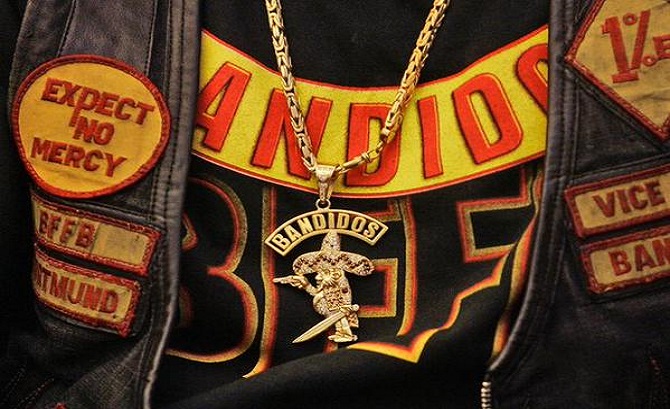

They had nicknames like “Weiner,” “Boxer,” “Taz,” “Little Mikey,” “Bam Bam,” “Chopper” and “Crash.”
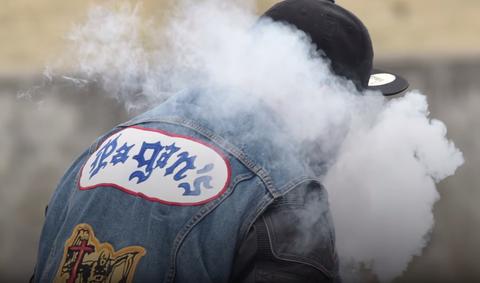
They were all connected — whether as members, associates or just hangers-on — to the Toronto chapter of the Bandidos Motorcycle Club.And on the night of Friday, April 7, 2006, some became murderers and others their victims in what remains Ontario’s worst mass killing in modern times.
The circumstances in which seven men lured eight biker brothers to a southwestern Ontario farm to be summarily executed sounds like something out of a Hollywood movie.
But the events of 10 years ago this week were all too real, and both police and bikers say the Bandidos massacre changed the balance of power in the Canadian underworld.
THE KILLINGS WERE orchestrated by Wayne “Weiner” Kellestine, a former president of the Bandidos Toronto chapter.

Kellestine had become convinced that he could seize control of the U.S.-based biker gang’s Canadian operation — and a lucrative trade in methamphetamine — only by wiping out most of his fellow Toronto members and then pinning the killings on their rivals, the Hells Angels.
Kellestine was arrested within days of the executions — which the Ontario Court of Appeal later called “an execution assembly line” — at his farm outside the sleepy hamlet of Shedden.
He and five other men were charged with the killings of:
- George “Pony” Jessome, 52, a tow-truck driver who was dying of cancer, and only craved companionship during his final days.
- George “Crash” Kriarakis, 28, a newlywed and former rugby player with no criminal record, who was trying to make the Bandidos more respectable.
- John “Boxer” Muscedere, 48, and Frank “Bam Bam” Salerno, 43, both of whom talked about devoting more time to their infant children.
- Paul “Big Paulie” Sinopoli, 30, who lived at home and had just been granted permission to leave the club to deal with his extreme obesity.

- Jamie “Goldberg” Flanz, 37, who wasn’t a full member of the club and had no criminal record. He ran a computer business and had a wife and two daughters.
- Michael “Little Mikey” Trotta, 31, who had just landed a full-time job leasing vehicles, and proudly showed off his new business cards.
- Luis Manny “Chopper” Raposo, 41, who had quit the club and been talked back into returning. Raposo lived at home with his parents.
THE TORONTO BANDIDOS had plenty of bravado, but very little money or underworld influence.
The self-styled “No Surrender Crew,” didn’t have a clubhouse of their own, either, so they held what they liked to call “church meetings” in the basement of a now-defunct Greek restaurant near the corner of Queen St. E. and Broadview Ave. But on the night of April 7, 2006, they were summoned out of the city to a meeting on Kellestine’s farm, just west of London.
The men joked and made small talk as they were ushered into the barn around 10:30 p.m. Perched in the rafters above them with a military-style rifle was their fellow club member, Michael “Taz” Sandham. Back in the farmhouse, Brett “Bull” Gardiner monitored police radio scanners. And outside in the darkness, circling the barn and armed with rifles and shotguns, were Dwight “D” Mushey, a Winnipeg nightclub owner; Marcelo Aravena, a failed mixed martial arts fighter; Frank Mather, 42, a homeless man with no violence in his extensive criminal record. and a Winnipeg biker who was only ever identified “M.H.”
“M.H.” would later dodge prosecution by becoming the star Crown witness at his fellow bikers’ trial. He gave a chilling account of what happened next.
When Sandham stirred at his sniper’s perch, Raposo turned upwards towards him. Raposo was the only member of the intended victims who was armed and, sensing an ambush, he fired his sawed-off shotgun, hitting Sandham in the chest.
The pellets bounced off Sandham, who was wearing the same sort of bulletproof vest he’d been issued when he’d worked as a police officer in rural Manitoba. Sandham fired back at Raposo, killing him.
Kriarakis and Sinopoli bolted for the barn door and were immediately cut down by pistol blasts from Kellestine. Kriarakis was caught in the stomach and Sinopoli in the thigh.
Over the next few hours, the men were held at gunpoint by Mushey, M.H. and Mather, while Aravena brandished a baseball bat. Kellestine, who was also armed, swigged beer as he ranted at the captives. Kriarakis prayed and talked about his love for his family until another captive told him to shut up.
The court would hear that Kellestine tried to convince Muscedere to join the murderers, but that Muscedere laughed in his face and refused to betray his biker brothers.
Glen Atkinson, a former secretary-treasurer of the Toronto Bandidos, knew the men and says he wasn’t surprised that Muscedere was brave in his final moments.
“He certainly would be the guy who would stand by you in a fight,” Atkinson said. “He was very, very loyal.”
Instead, Muscedere pleaded with his fellow bikers to get medical help for Kriarakis and Sinopoli, who were bleeding from their gunshot wounds.
He also repeatedly denied that Flanz had been disloyal to the club, even though he knew this would enrage the Nazi-loving Kellestine, since Flanz was Jewish.
At 12.37 a.m., Muscedere’s cellphone rang. It was his girlfriend, calling to tell him that she had made a collage of photos of their infant daughter.
Despite being held at gunpoint, he didn’t let on there was any problem. Muscedere stuck to the biker code, which forbade turning to the police for help, even in the most dire of circumstances.
 Related The two men accused of gunning down a full-patch member of the Hells Angels get new date set
“How’s the baby?” he asked. “I’ll see you in a couple hours. I love you.”
Shortly after that, Kellestine began to march his captives out of the barn, one-by-one, and order them into their vehicles.
Each was then shot dead at close range.
In one case, children’s toys had to be moved in a car to make room for a victim. As he was led to his death, Salerno asked his captors to help take care of his newborn son.
Between shootings, Kellestine danced a jig and sang the German national anthem, “Das Deutschlandlied.”
A police wiretap later picked up Mushey marveling at Muscedere’s courage when his time came to be shot by Kellestine, a man he had considered a friend.
“This guy, he went out like a man,” Mushey told Aravena. “. . . He laughed. Went like a man.”
Flanz was last to be ushered out of the barn. Kellestine told him that because he was Jewish, he would have to wait until all of the others were executed so that he would suffer the most. Flanz couldn’t stop talking about his love for his young children as he awaited his turn.
The sun was starting to come up when Flanz was finally called outside to die.


 INSANE THROTTLE
3 responses to “Flashback in time, The Bandidos massacre: An ‘execution assembly line’ wiped out the biker gang 10 years ago”
On the insane throttle I recently made referrance to the lennoxville massacre..where hells angels murdered a group of their own in quebec ….and we have the banditos in ontario who didnt only murder their own..they set up an assembly line..hmmmm now let me think for a moment… …. nahhh its ok i think ill remain an indepedant .
LikeLiked by 1 person
Sick fucks! Wiped out damn good bros and for what? A damb electric chair ride. Shit. Sounds good Buzzzzzzzzz
On Tue, Dec 10, 2019, 10:48 AM Insane Throttle Biker News Insane Throttle posted: ” By Peter Edwards They had nicknames like > “Weiner,” “Boxer,” “Taz,” “Little Mikey,” “Bam Bam,” “Chopper” and “Crash.” > They were all connected — whether as members, associates or just hangers-on > — to the Toronto chapter of the Bandidos Motorcycle Club.And” >
LikeLike
I think it’s a danm shame for someone you call a brother would do such a thing and for what
LikeLike