
James Hollywood Macecari
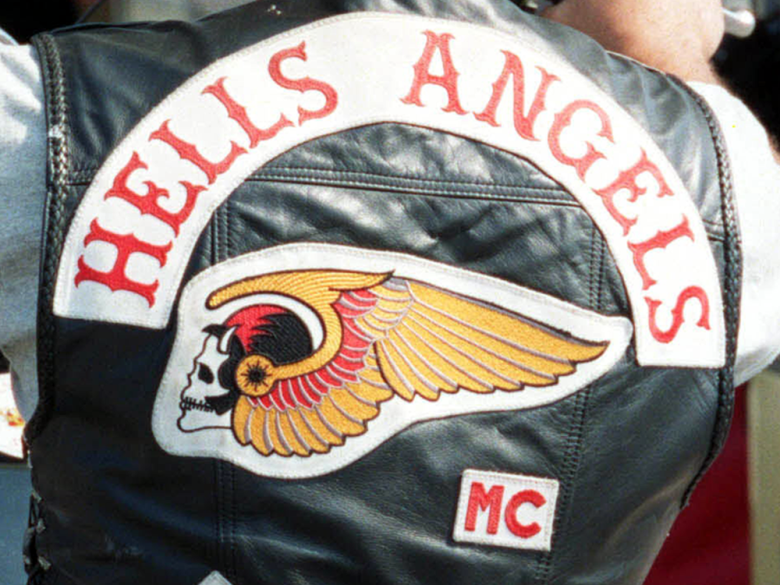
Two members of the Hells Angels Motorcycle Club (HAMC) were recently sentenced in federal court for their roles in a brutal, daylight attack on rival Pagan Motorcycle Club members at a Dairy Queen in North Carolina. David Lee Woodall, 47, of Fayetteville, received 57 months in prison, while Jason Lee Hathaway, 48, of Columbia City, Indiana, was sentenced to 51 months. Both had pleaded guilty to Violent Crime in Aid of Racketeering (VICAR) for attempted murder.
The incident took place on July 22, 2023, in Cumberland County, North Carolina. According to court documents, Hathaway rode his motorcycle into the Dairy Queen parking lot and spotted three Pagan members. He immediately threatened them with a hammer and attempted to strike one, instead shattering the glass of their vehicle. Hathaway then called for backup from fellow Hells Angels. Woodall and others quickly arrived, and the group confronted the Pagans in the parking lot. The assault involved hammers, brass knuckles, and fists. The violence only stopped when one of the Pagan members fired shots in self-defense, killing a Hells Angels associate. The attack occurred in broad daylight while innocent customers were inside the restaurant, and it resulted in damage to several unrelated vehicles.
This confrontation was not random but part of a larger, ongoing feud. Federal prosecutors noted that Hells Angels members operated under a standing order to attack, injure, or kill members of the Pagans Motorcycle Club, their primary rivals. The HAMC is described as a transnational outlaw motorcycle gang that uses violence and intimidation to enforce its rules, with support clubs like the Red Devils serving as recruiting pipelines. This Dairy Queen incident was tied into a broader federal racketeering investigation.
The Broader Impact on Independent Bikers
While 1% clubs like the Hells Angels and Pagans engage in these high-profile feuds, the real victims often include thousands of independent bikers who simply want to enjoy the open road, camaraderie, and motorcycle lifestyle without any club affiliation. The violence creates a ripple effect that leads to widespread motorcycle club profiling and biker profiling by law enforcement and the public alike.

After incidents like the Dairy Queen attack, police departments and agencies such as the ATF increase surveillance and enforcement at biker events, rallies, poker runs, and even casual group rides. Officers conduct more traffic stops, license plate checks, and field interviews targeting anyone who looks the part — black vests, tattoos, cruiser bikes, or riding in formation. This heightened scrutiny makes independent riders feel like suspects by default, even when they have no connection to any 1% club.
Collateral damage from 1% club violence disproportionately affects the 99% who ride clean and legal. Independent riders bear the brunt of the reputational fallout without any of the “benefits” or protections that patched members might claim. Their freedom to ride without hassle is throttled by the actions of a violent minority. A simple Sunday group ride can turn into a police encounter, insurance premiums rise across the board for cruiser owners, and the joy of the lifestyle gets overshadowed by constant suspicion. This erodes the very essence of what draws most people to motorcycles: freedom, community, and escape from everyday constraints.
Law enforcement faces a difficult balancing act. On one hand, profiling based on known patterns of 1% club behavior is often justified — intelligence-driven policing has successfully disrupted racketeering, drug trafficking, and murder plots that pose real public safety threats. When clubs maintain “standing orders” to attack rivals and members openly wear patches advertising their affiliation, targeted enforcement protects communities and prevents escalation. Ignoring these patterns would be irresponsible.
On the other hand, broad-brush profiling that sweeps up independent riders crosses into overreach. Not every rider with a vest or tattoos is a threat, and treating them as such violates principles of individualized suspicion protected by the Constitution. Many independents report feeling harassed for simply participating in the culture, which can discourage new riders and shrink the overall motorcycle community.
Another common issue is the proliferation of “No Colors” signs in bars and restaurants. Establishments post these warnings to avoid becoming battlegrounds for club feuds. While understandable from a business and safety perspective, the policy often extends to anyone wearing a three-piece patch, a plain black vest, or even riding-related apparel. Independent bikers who pose zero threat find themselves turned away or asked to remove clothing, simply because club violence has poisoned the reputation of the entire biker aesthetic. This creates a chilling effect on casual socializing and further isolates the 99% from normal public spaces.
Enhanced enforcement at biker events compounds the problem. Large gatherings that once fostered community now feature metal detectors, K-9 units, intelligence officers, and strict restrictions. Some venues and towns cancel events outright to avoid potential trouble, reducing safe spaces for all riders to connect. Independents, who lack the structure and legal support of formal clubs, are hit hardest — they get painted with the same brush but don’t have the resources to push back.
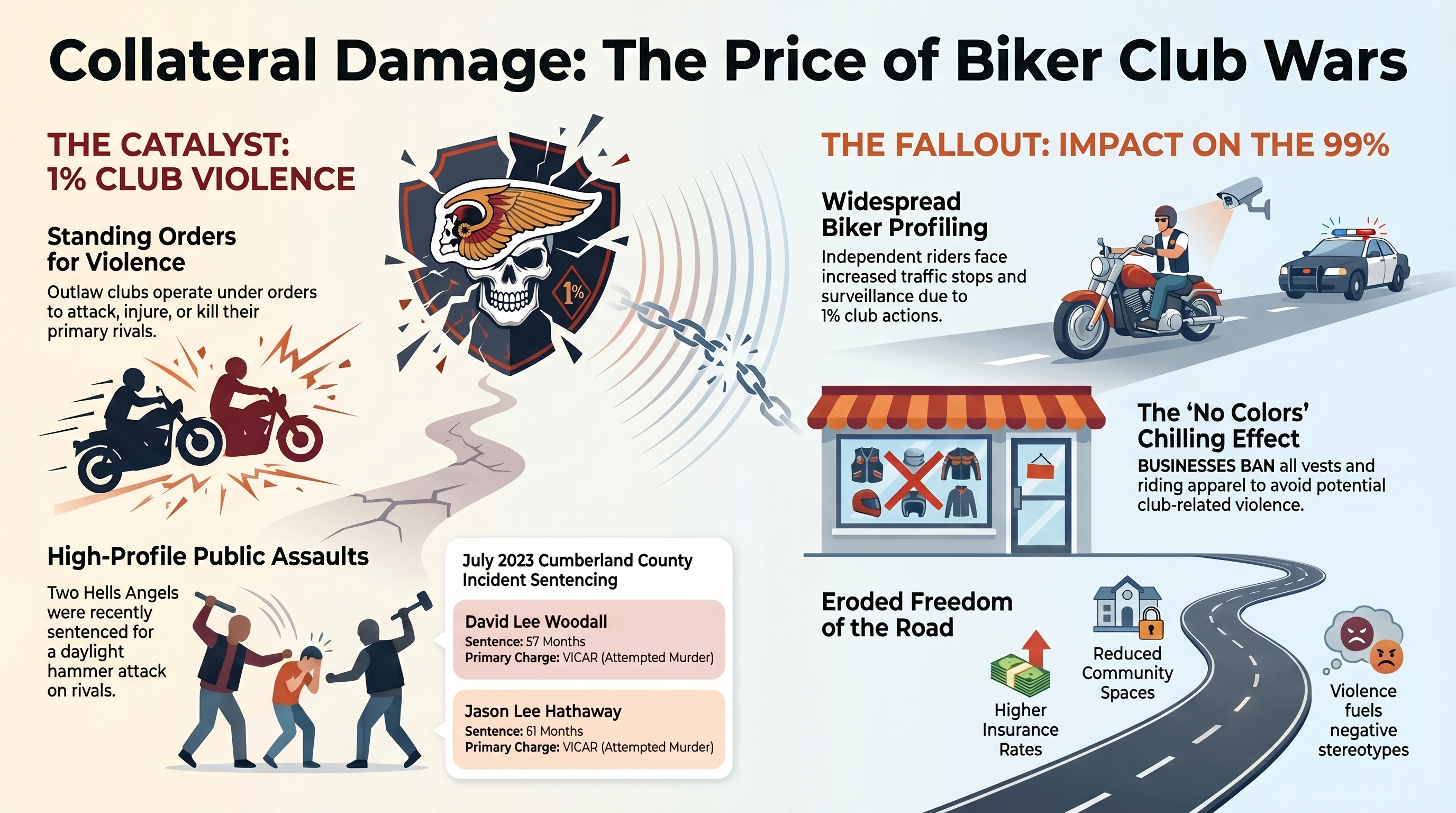
Media coverage of these violent clashes further fuels negative stereotypes. Stories of hammer attacks, shootings, and racketeering cases reinforce the idea that all bikers are dangerous outlaws. This leads to real-world discrimination: higher insurance rates based on bike type, landlords reluctant to rent, employers questioning character, and family members discouraging riding due to safety fears. The public can’t easily distinguish between patched 1% members and everyday enthusiasts, so the entire culture suffers.
In many cases, this profiling pushes some independent riders toward clubs for protection or a sense of belonging, ironically feeding the cycle. Responsible riding groups and forums frequently discuss how these incidents throttle the freedom that drew people to motorcycles in the first place. The 1% lifestyle emphasizes brotherhood and defiance, but its collateral damage affects the 99% who ride clean and legal.
Ultimately, events like the Hells Angels sentencing highlight a painful reality in the biker world. While club feuds grab headlines, independent bikers pay the price through eroded civil liberties, restricted events, “No Colors” policies, and constant suspicion. The motorcycle community thrives on freedom and shared passion — but as long as a violent minority dominates the narrative, that freedom remains under threat for everyone else.
Responsible riders continue advocating for better education, community outreach, and clear distinctions between hobbyists and criminals. Law enforcement should focus on actual criminal behavior rather than appearance alone, while clubs must recognize how their actions harm the broader riding public. Only then can the open road truly remain open for the 99%.
- The High Price of Outlaw Motorcycle Clubs Rivalry on Independent Bikers
- Harley-Davidson Revives Iconic Super Glide for 2026 with Nostalgic Styling and Modern Performance
- Police Disrupt Hells Angels Network in Major Trans-Tasman Gang Operation
- Raw & Unfiltered: Biker News and the Outlaw Ethos
- Hells Angels Members Sentenced in Federal Court for Violent Clash with Rival Pagan’s Motorcycle Club

 INSANE THROTTLE
Leave a comment