Insane Throttle News | October 28, 2026
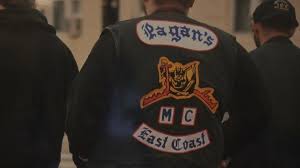
A federal jury returned guilty verdicts on Friday, October 23, 2026, against two former members of the Pagan’s Motorcycle Club for their roles in planned violent confrontations targeting members of a rival club in the Kansas City region. Charles E. Smith Jr., 40, known as “Crash” and a Kansas City resident, and John Travis Fisher, 52, known as “T-Bone” from Mannford, Oklahoma, were each convicted on charges tied to distinct incidents from September 2022.
Smith was found guilty of assault with a dangerous weapon in aid of racketeering and discharging a firearm during and in relation to a crime of violence. Fisher was convicted of attempted assault with a dangerous weapon in aid of racketeering. The cases stem from coordinated activity involving members of the Pagan’s and an affiliated support club. Under federal statutes, Smith faces a maximum of life in prison without parole, while Fisher faces up to three years. Actual sentences will be determined later by the court after presentence investigations and consideration of advisory guidelines and other statutory factors; the maximums do not automatically dictate the final punishment.
Trial evidence detailed Fisher’s involvement in a September 3, 2022, incident in Topeka, Kansas. Fisher traveled to the area with other Pagan’s members and support club associates as part of a planned retaliatory attack on a rival club member. Before any confrontation, the group discussed methods that included using an axe handle or a firearm. They located a potential target in a hotel parking lot and prepared to move on him, but internal disagreement among the participants caused them to abandon the plan. The group then returned to the Kansas City area without carrying out the assault.

Jurors also heard evidence regarding a separate attack two weeks later involving Smith. On September 17, 2022, in Blue Springs, Missouri, Smith and other members of the Pagan’s and its support club pursued a rival club member who was traveling alone. They forced the man off the roadway. Several in the group were armed with firearms, and at least one carried an axe handle. After the roadside confrontation and assault, the victim was shot seven times, sustaining wounds to his knee, thigh, forearm, biceps, buttocks, and the back of his leg.
These convictions arrive against the backdrop of long-running territorial and personal rivalries among outlaw motorcycle clubs. Federal prosecutors have described the Pagan’s Motorcycle Club as a violent organization involved in racketeering activity and drug trafficking, with a history of using force to protect claimed territory from rivals that include the Hells Angels, Outlaws, El Forastero, and Sons of Silence, among others. The 2022 incidents fit a pattern seen in multiple regions where disputes escalate from threats and surveillance into planned ambushes involving weapons and group numbers.
The jury’s findings highlight the federal government’s continued use of racketeering statutes to prosecute organized motorcycle club violence. Charges of assault or attempted assault “in aid of racketeering” require proof that the acts were intended to maintain or increase standing within the enterprise, rather than purely personal disputes. In these cases, prosecutors presented the attacks as club-directed retaliation. The firearm discharge count against Smith carries especially severe consequences because it is tied to a crime of violence under federal law.
Both men had been indicted in August 2024. The multi-year gap between the alleged acts and the trial is not uncommon in complex racketeering investigations that rely on cooperating witnesses, electronic evidence, and detailed reconstruction of group movements. Sentencing hearings have not yet been scheduled; they will follow completion of presentence reports by the U.S. Probation Office.
For the broader motorcycle club scene, the outcome reinforces that federal prosecutors treat planned cross-club violence as enterprise crime rather than isolated street fights. Convictions of this type can also affect support club members and associates who participated in planning or logistics, even if they were not the primary actors in the final confrontation. Local law enforcement in Kansas and Missouri have historically monitored these clubs closely; the federal results add another layer of scrutiny that often extends beyond the specific defendants.
The October 23 verdicts close the trial phase for Smith and Fisher on these particular charges. Both men remain subject to the federal sentencing process, and any appeals would follow the imposition of final sentences. The cases illustrate how quickly planned retaliation can produce life-altering federal exposure when firearms and group coordination are involved, regardless of whether every intended attack is fully completed.
- Former members of the Pagan’s Motorcycle Club now to face the heat
- Hells Angels Berdoo Chapter Pushes Back Hard on Fontana PD Claims Linking Man to Club After Federal Sentence
- Alleged Hells Angels Regional Leader Luck Has Ran Out
- Why Does Harley Davidson Have So Many Haters
- Satans Choice Shooting New Biker War Brewing


Leave a Reply